
Most furniture damage we see on a move wasn't done while loading or unloading. It happened during the drive, when something shifted, rubbed, or pressed against something else for forty minutes of motorway. By the time the van opens at the other end, the damage is done and nobody saw it happen.
Knowing how to wrap furniture for moving means understanding what fails in transit, not just what looks neat in the van. We've seen the same patterns enough times to call them.
For a real price for our packing service, the quickest path is a free, no-obligation quote. WhatsApp us or call 07873 405 938 with rough room counts and we'll turn a price around quickly.
The wrapping that damages more furniture than no wrapping at all
Cling film direct on wood
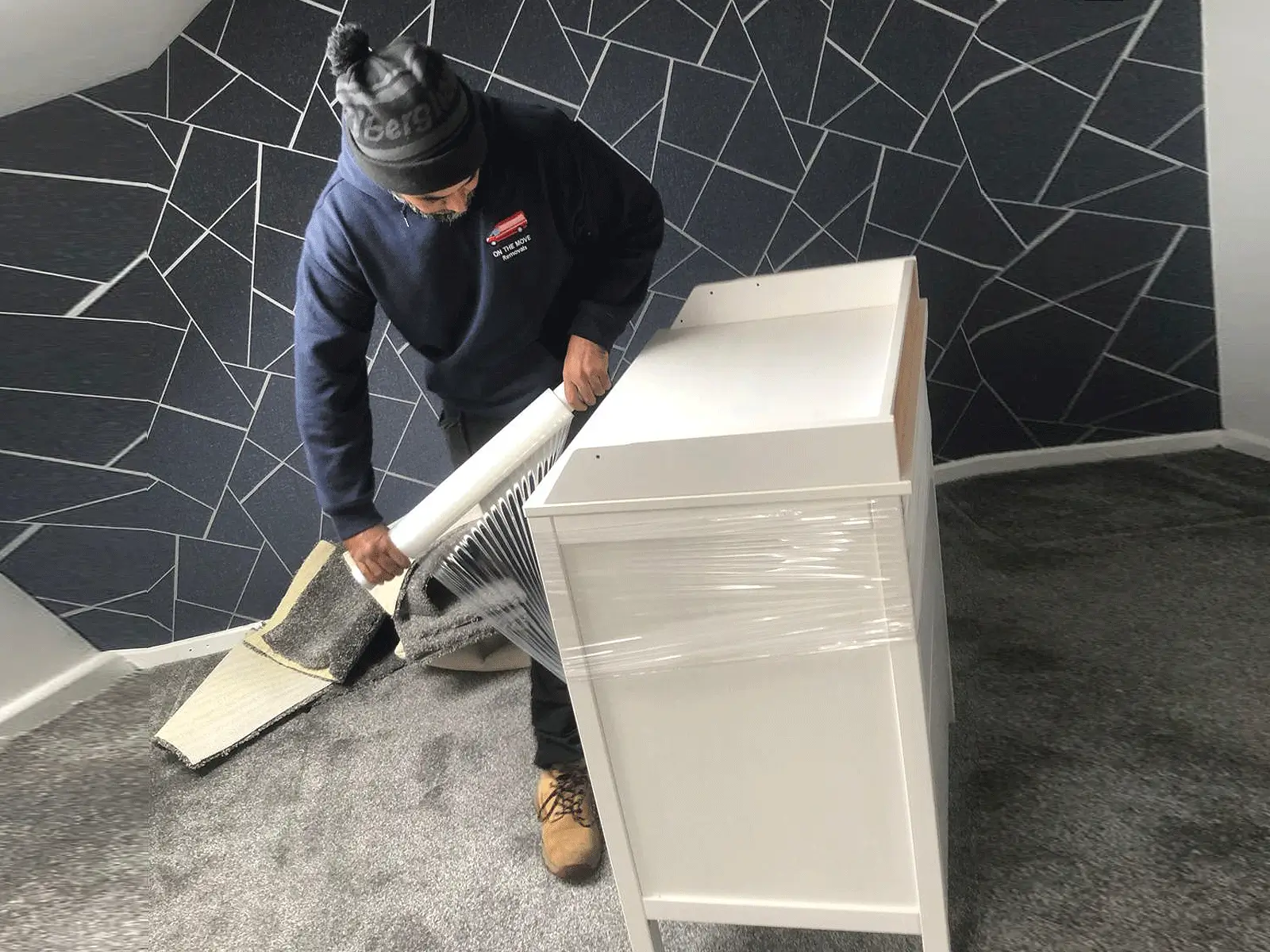
Cling film traps moisture against wood. On a humid day, especially with leather or polished veneer, the wood underneath fogs, watermarks form, and on white-painted furniture, the paint can lift in patches when you peel the film off.
Cling film is fine for keeping drawers shut on a chest of drawers, IF the wood is sealed. It's not a wrap.
Bubble wrap as the only protection
Bubble wrap compresses to nothing under sustained pressure. After two hours pressed between two heavy boxes, it's a flat plastic sheet, not protection. It also leaves a faint dimple pattern on soft finishes when the pressure is enough.
Bubble wrap is good for fragile items in a box. It's not the right material for a sofa.
Rope tied directly to wood
Rope under tension cuts into anything softer than itself. On a polished or veneered finish, even one rope-tightening cycle can leave permanent compression marks at every contact point.
If you're using rope or webbing, there must be a soft layer (blanket, calico) between the rope and the surface.
The materials that actually work
- Heavy moving blankets, quilted and calico-faced. These don't compress, don't trap moisture, and stay where you put them. We supply these on every move.
- Webbing straps, wider than rope, distribute pressure across more surface area. Use over the blanket, not direct on the wood.
- Cardboard corner protectors for the corners of dressers, wardrobes, and any furniture with sharp 90-degree edges. These take the pressure of stacking.
- Stretch-wrap (only over a blanket) is fine for keeping the blanket secured to the furniture, never direct on the wood.
- Acid-free tissue paper for any genuinely valuable polished wood (antiques, lacquered surfaces). Sits between the wood and the blanket.
Rough cost if you're DIY: £50 to £90 buys enough blankets, straps, and corner protectors for a full house move. Most of it's reusable.
Specific furniture, specifically
Sofas
Calico-lined blanket over the whole sofa. Strap loosely around the middle to keep the blanket on (not tight, that compresses the cushions). Cushions remove and bag separately. Legs unscrewed if possible.
Plastic sofa covers are fine for a same-day move. They are wrong for storage or for any move with a leg longer than two hours.
Wardrobes and dressers
Empty completely, dismantle if it's flat-pack. Stored flat in transit, blanket-wrapped, screws in a labelled bag taped to the largest panel. An MDF wardrobe loaded assembled into a van, sat next to a fridge for an hour, will warp visibly.
Dining tables
Legs off, base wrapped in blanket, top wrapped separately with cardboard between to prevent the legs scratching the underside.
Glass-fronted units
Doors removed if possible, wrapped separately in blanket plus an outer layer of cardboard. The frame travels separately. Glass doors in their frame, leaning against anything in a van, almost always crack.
Mirrors
Artist tape an X across the front of the glass before wrapping. If the glass cracks during the move, the tape holds it as one piece instead of shedding shards. Then a layer of blanket and a layer of corrugated cardboard, edges taped.
Beds
Headboards wrap in blanket, leaning flat against the side of the van. Bed frames dismantled if possible. Always bag every screw and bolt and label which bed it belongs to. Future-you on the unpack day will not remember.
Loading order matters more than wrapping
Even perfect wrapping fails if the van's loaded badly. The pattern for damage-free loads:
- Heaviest items at the front of the load space (white goods, heavy furniture) so they don't shift forward under braking
- Boxes between the heavies to lock them in place
- Long flat items vertical against the side walls (mirrors, headboards, table tops with cardboard)
- Soft furnishings on top of the box layer
- Last on, first off (the things you need at the new place that night)
A van that's properly loaded doesn't need much strapping. A poorly loaded van can't be saved by any amount of straps.
When to pay for professional packing
Honest answer: when the cost of one item being damaged exceeds the price of professional packing for the whole move.
Our packing service is £60 per hour with a two-hour minimum, materials supplied. For a typical three-bedroom house, that works out to half a day of packing for two crew (4 to 6 hours total). Compared to replacing one antique dresser, it's small money.
If the contents of your house are mostly modern flat-pack furniture and replaceable items, DIY wrapping with rented blankets is fine. If there's anything inherited, antique, fragile, or sentimental, professional packing is worth it.
Our honest advice
The biggest packing mistake we see on DIY moves is panic-wrapping the day before, with whatever materials are to hand. Bubble wrap stretches to cover everything, cling film fills the gaps, and one critical piece gets nothing because the materials ran out.
Plan the materials a week ahead. Buy more blankets than you think you need. Wrap one piece properly to learn the pattern, then wrap the rest the same way. The first one always takes longer than the next ten.
For more on what we'd recommend for a DIY job, our packing for a house move article covers boxes, tape, and box loading. Or WhatsApp us for a quote on the full packing service.
Frequently Asked Questions
What''s the best material to wrap furniture for moving?
Should I wrap a leather sofa in plastic?
Do I need to dismantle wardrobes for a move?
How long does it take to pack a three-bedroom house professionally?
Keep reading

How to Pack Glassware for Moving Without Breakages
A practical guide to packing glasses, mugs, bowls, plates, and fragile kitchen items for a move, with box choice and wrapping tips.
How to Pack a TV for Moving Without Cracking the Screen
How to pack a TV for moving, including original boxes, bubble wrap, blankets, screen protection, loading position, and mistakes to avoid.