
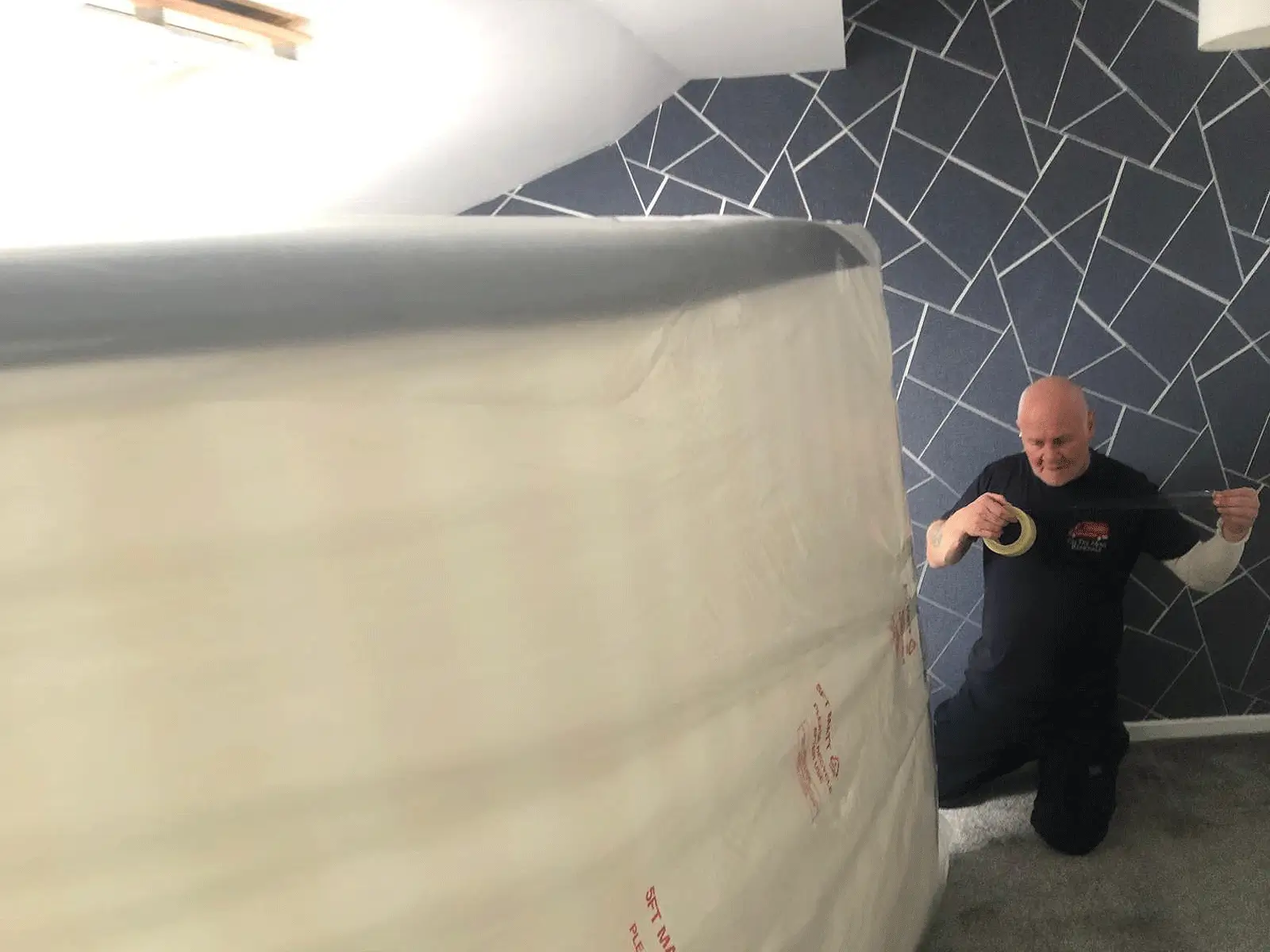
Packing is the part of moving that looks simple until you are surrounded by half-filled boxes at midnight. The problem is not usually effort. It is order.
This guide gives you a packing system for a whole house move. If you only need advice for glass, mirrors, crockery, and delicate items, read our detailed guide to packing fragile items. This article is the broader plan: what to pack first, how to label it, how to stop boxes collapsing, and how to avoid damage on moving day.
If you would rather not spend evenings living among cardboard, our packing service can handle the whole job.
The golden rule: pack by priority, not by room
Most people start in the room they are standing in. That is why they end up packing things they still need and leaving the awkward stuff until the night before.
Pack in this order instead:
- Storage spaces and loft items
- Decorative items and books
- Spare bedding and out-of-season clothes
- Dining rooms, spare rooms, and home offices
- Most kitchen items
- Bedrooms
- Bathroom overflow
- Daily essentials
The things you use least should be packed first. The things you use every day should be packed last.
What packing materials you actually need
You do not need every product in the shop. You need enough good basics.
Useful supplies:
- Small boxes for books, crockery, tools, and heavy items
- Medium boxes for most household goods
- Wardrobe boxes for hanging clothes
- Packing paper for plates, glasses, ornaments, and gaps
- Bubble wrap for delicate items
- Strong tape
- Marker pens
- Mattress covers
- TV or picture boxes for screens and framed items
- Zip bags for screws and fittings
Avoid giant boxes unless the contents are light. A huge box full of books is not a box. It is a back injury with handles.
How to label boxes properly
Good labels make unloading faster. Poor labels make the first night harder.
Write on two sides of every box:
- Destination room
- Short contents summary
- Fragile if needed
- Open first if needed
Good label:
Kitchen - mugs, tea, coffee, kettle bits - Open first
Bad label:
Stuff
If you want to go further, number each box and keep a simple note on your phone. You do not need a spreadsheet unless you enjoy spreadsheets. A numbered list is enough.
How full should each box be?
Aim for full, not bulging.
A box should close flat without you forcing it. Empty space lets items move and break. Overfilled boxes split, crush, or refuse to stack.
Use towels, tea towels, packing paper, cushions, or bedding to fill gaps. Do not leave hollow spaces around fragile items.
Room-by-room packing plan
Kitchen
The kitchen usually takes longest because it has the most awkward shapes.
Start with:
- Serving dishes
- Spare mugs and glasses
- Baking trays
- Rarely used pans
- Recipe books
- Small appliances you can live without
Leave until last:
- Kettle
- Two mugs
- Plates and cutlery for the final day
- One pan
- Tea, coffee, snacks
- Cleaning cloths
Pack plates vertically like records, not flat in a pile. Fill gaps so they cannot rattle. For glasses, wrap each one and keep weight light.
Living room
Start with books, ornaments, games, spare cables, and decorations. Keep remote controls together in a labelled bag.
For TVs, take photos of the cable setup before unplugging anything. Tape the remote to the TV stand or put it in your open-first box. Do not tape anything directly to the screen.
Bedrooms
Pack out-of-season clothes first. Keep one suitcase per person for the final week, as if you were going away.
For wardrobes, wardrobe boxes save time because clothes stay on hangers. If you are not using wardrobe boxes, group clothes in bin liners while still on hangers, but do not use thin bags for anything heavy.
Bathrooms
Bathrooms look quick but leak easily.
Use tape or bags around lids. Keep liquids upright. Throw away old bottles instead of moving half-empty products you do not use.
Pack one bathroom essentials bag:
- Toothbrushes
- Toothpaste
- Soap
- Shower gel
- Medication
- Toilet roll
- Towels
Home office
Back up your computer before packing it. Photograph cables. Put chargers, hard drives, and important documents in a bag that travels with you, not buried in the van.
Paperwork should be packed in small boxes. It gets heavy fast.
Garage, shed, and loft
These areas take longer than people expect. Start early.
Do not pack flammables, leaking tins, open paint, or anything unsafe. Dispose of them properly before the move. Tools should go in small boxes or crates.
If you have garden furniture, bikes, ladders, or heavy garage items, tell your mover before the quote is final.
How to pack fragile items
For the full method, read How to Pack Fragile Items So Nothing Breaks in Transit.
The short version:
- Wrap each item separately
- Use small boxes for heavy fragile items
- Put cushioning on the bottom
- Pack plates vertically
- Fill gaps tightly
- Label fragile on two sides
- Do not mix heavy and delicate items
Fragile boxes should feel solid when gently moved. If you hear clinking, repack them.
Furniture: what to dismantle and what to leave
Flat-pack wardrobes, beds, desks, and large tables often need dismantling. Solid furniture may move as it is.
If you dismantle furniture yourself:
- Photograph it first
- Put screws in a labelled zip bag
- Tape the bag to the furniture frame, not to polished surfaces
- Keep Allen keys and tools in your open-first box
If you are using house removals, ask whether dismantling and reassembly is included. For many full moves, it can be planned into the job.
The open-first box
This is the box you need before anything else. Keep it in your car if possible.
Pack:
- Kettle
- Tea, coffee, sugar
- Mugs
- Snacks
- Toilet roll
- Hand soap
- Phone chargers
- Medication
- Basic tools
- Cleaning cloths
- Bin bags
- Pyjamas
- Bedding for the first night
- Pet food if needed
Moving day is much easier when you can make a drink, wash your hands, charge your phone, and make the bed.
What not to pack in the removals van
Keep these with you:
- Passports
- House deeds and legal paperwork
- Medication
- Jewellery
- Cash
- Laptops and hard drives
- Keys
- Completion documents
- Sentimental items you would be upset to lose
Even with a careful crew, some things are better kept under your own control.
Packing timeline
Four to six weeks before
Declutter. Pack loft, garage, spare room, books, and decor.
Two to three weeks before
Pack non-essential kitchen items, out-of-season clothes, spare bedding, and home office overflow.
One week before
Pack most rooms down to essentials. Confirm what furniture needs dismantling.
Day before
Pack daily-use items, strip beds, defrost the freezer, and prepare your open-first box.
Moving day
Final walkthrough. Check cupboards, loft, shed, and behind doors. Keep documents and essentials with you.
For a fuller timeline, use our moving house checklist.
When professional packing is worth it
Packing yourself saves money. Professional packing saves time, stress, and damage risk.
It is worth considering professional packing if:
- You work full time and cannot lose evenings to boxes
- You have young children
- You have lots of fragile items
- You are moving a large house
- Completion dates are tight
- You simply want the move handled
Our packing service can cover the whole home, just the kitchen, or only the fragile items. For small moves, we can also help through man and van or flat removals.
Bottom line
Good packing is not about using more cardboard. It is about packing in the right order, using the right box size, filling gaps, and labelling everything so the move has a system.
Start with the things you use least. Keep the things you need most with you. If a box rattles, fix it before moving day.
Frequently Asked Questions
How early should I start packing for a house move?
What should I pack last when moving house?
Is it better to use small or large boxes?
Do removal companies offer packing services?
Keep reading

How to Pack Glassware for Moving Without Breakages
A practical guide to packing glasses, mugs, bowls, plates, and fragile kitchen items for a move, with box choice and wrapping tips.
How to Pack a TV for Moving Without Cracking the Screen
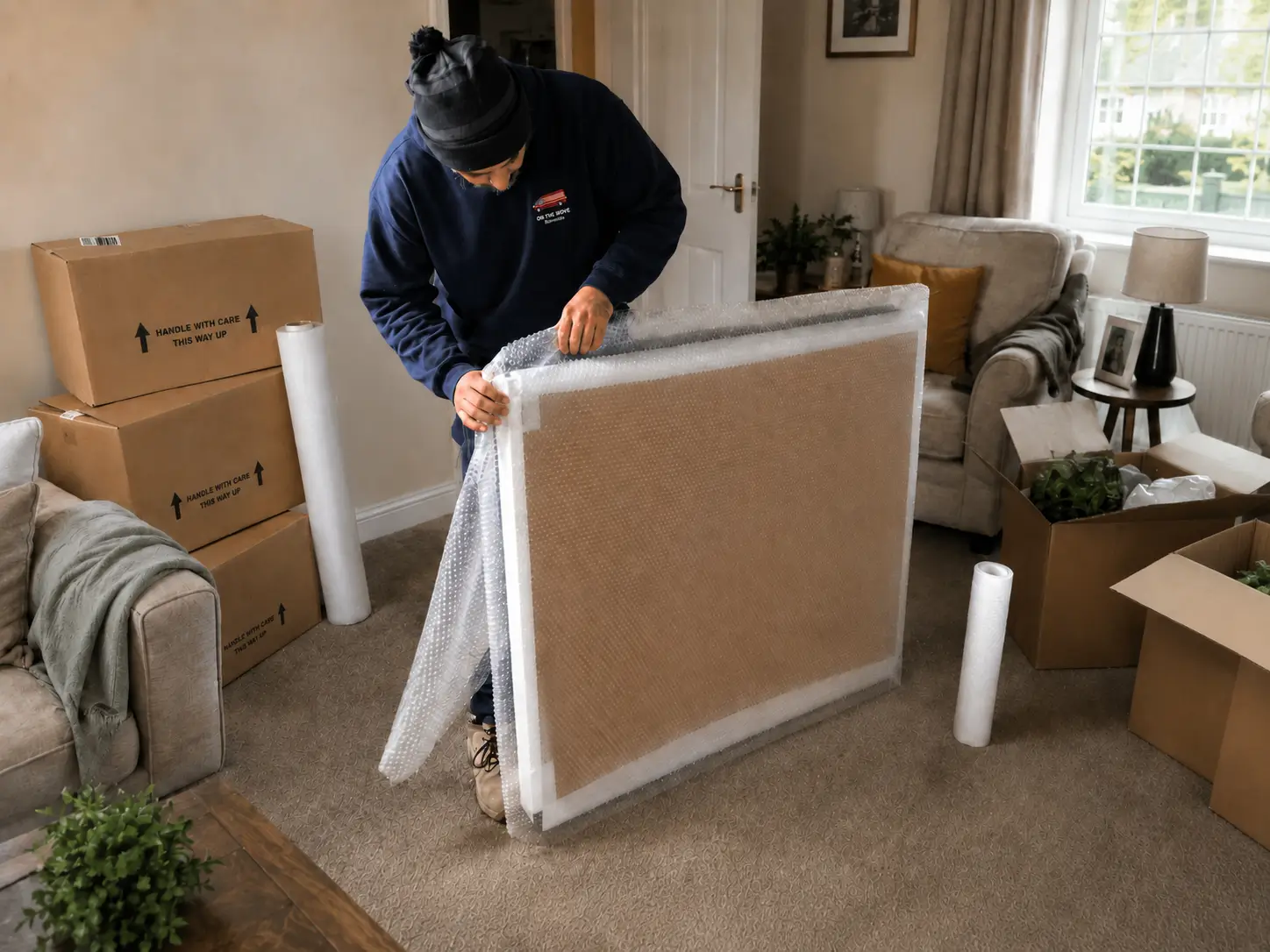
How to pack a TV for moving, including original boxes, bubble wrap, blankets, screen protection, loading position, and mistakes to avoid.