
Office moves don't fail on the day. They fail two weeks before, when somebody assumed somebody else was sorting the IT, the new building's lift hours, or who was packing the printers. By moving day the gaps are baked in, and the cost is downtime your business can't afford.
Knowing how to plan an office move means front-loading the boring decisions while there's still time to fix them. We've moved offices from two-person studios in Huddersfield to multi-floor businesses across West Yorkshire, and the pattern is consistent: clarity early beats speed late.
For a real price for your specific office move, the quickest path is a free, no-obligation site survey or WhatsApp video walkthrough. WhatsApp us or call 07873 405 938 with rough square footage and timing, and we'll turn a price around quickly.
Office moves have four phases. Most companies skip three.
Phase 1: Decisions (4 to 6 weeks out)
The questions to settle before anyone packs a single box:
- Lift access at both ends. Is there a goods lift? When can it be booked? Some buildings only allow moves outside business hours.
- Parking and loading bay rules. Many city-centre offices have a 30-minute loading limit. We need to know.
- What stays vs what goes. Old desks, filing cabinets, bulky printers. Some businesses move 80% of what they own and bin 20% during the move. Decide which is which.
- IT cutover. When does the new internet get installed? When does the old line go dead? The gap between those two is your downtime, plan it.
- Insurance. Goods-in-transit on commercial equipment is different from a house move. Confirm.
If these aren't settled four weeks out, every later decision compresses around them.
Phase 2: Prep (1 to 2 weeks out)
Pre-move sorting and packing:
- Label every desk. Number system: 1, 2, 3 for desks. Tape a number to the underside of each desktop. Same number on the boxes that go with that desk. The unpack at the other end is much faster.
- IT inventory. Photo every monitor, computer, and dock with its cable arrangement. Box the cables in a labelled bag taped to the device.
- Sensitive document handling. Paper records covered by GDPR or commercial confidentiality should travel separately, ideally with a manager rather than in the general boxes.
- Server and network gear. This is its own move, and it's almost always the longest pole. Plan it with whoever runs your IT.
Phase 3: The move day
Best-case office move days are dull. Boring is the goal. The team arrives, the trolleys come out, and the boxes flow in a steady line for four to six hours.
What slows it down: items not pre-labelled, lift bookings clashing with another tenant, parking that turned out to be smaller than expected, and one critical person on holiday.
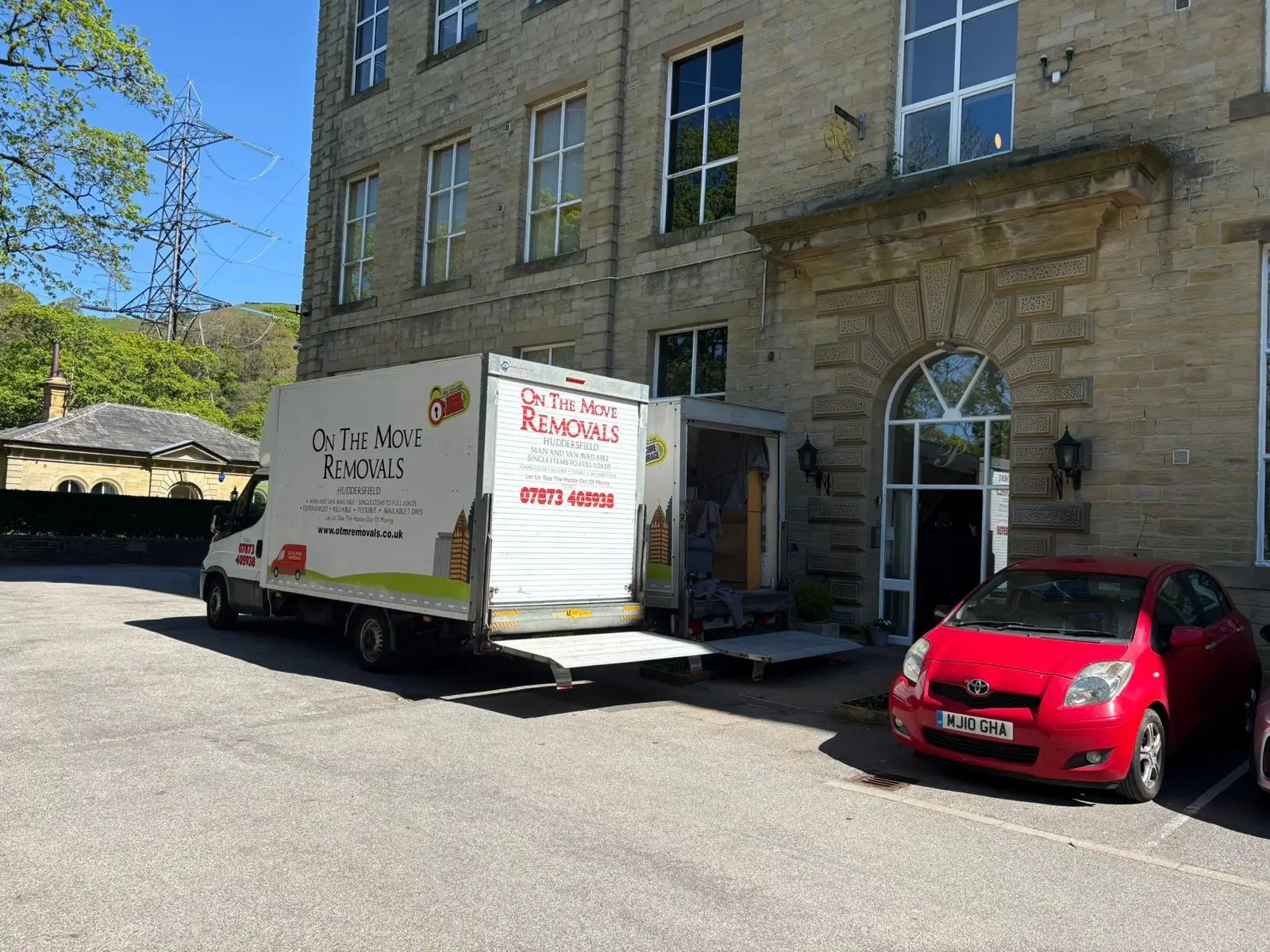
What we bring to a typical office move: 2 to 4 crew, a 3.5t Luton van (sometimes two), specialist trolleys for filing cabinets and IT, and protective floor coverings if either building has hard or polished floors.
Phase 4: Setup (the day after)
The phase most companies underestimate. Day-one in the new office is rarely productive. Day-two is when:
- Network cables get traced
- The phone system finally answers
- Furniture gets configured the way it'll actually live, not the way it landed
- Someone realises the old key cards don't work the new doors
If you can give the team Tuesday off and reopen Wednesday, downtime is 24 hours. If everyone's expected at desks Monday morning after a Saturday move, downtime is more like three days because nothing works yet.
The IT cutover is the real risk
Eight times out of ten, office moves go smoothly except for one thing: the internet doesn't work for two days at the new place. The reason is BT (or whoever the provider is) needs lead time, and the lead time isn't well advertised.
The fix is to book IT cutover with the provider four weeks out, confirm the install date in writing, and have a 4G backup ready for the first 48 hours. Mobile hotspots cost £20 a day to rent and have saved more office openings than any other single decision.
Weekend moves cost more, but sometimes they're worth it
We charge a premium for Saturday and Sunday moves (typically 25 to 30% over weekday rates). Two reasons: it costs us more in crew weekend pay, and the building access is often harder out of hours.
A weekend move makes sense when:
- The business runs Monday to Friday and a Friday-night move with all weekend to set up means Monday opens normally
- The new building only allows moves outside business hours
A weekend move doesn't make sense when:
- The business is closed two days anyway, and a Tuesday weekday move costs less and gets the same result
What we charge for office removals
Office moves are quote-based because every job is different. As a rough guide:
- Small office (under 10 staff, 1 to 2 vans): typically £400 to £900 for a local move
- Medium office (10 to 30 staff, 2 to 3 vans, 1 day): typically £900 to £2,200
- Larger move with multiple vans, weekend timing, or complex IT requirements: quoted per job
Our office removals service covers the lot, including packing, dismantling and reassembling office furniture, IT moves with cable photography and reassembly, and storage between sites where dates don't line up.
Our honest advice
The single biggest predictor of an office move going well is whether the business has appointed one person as move coordinator with authority to make calls. If three managers are part-deciding things, decisions get missed. If one person owns it, they catch the gaps.
That coordinator doesn't need to be senior, just empowered. The questions they need to be allowed to answer: when packing starts, what gets dumped, who handles IT, who's the contact on move day.
If you're between getting quotes for an office move, get in touch for a free site survey. We'll walk both buildings, ask the questions that catch the gaps, and turn a written quote around quickly.
Frequently Asked Questions
How much does an office move cost in West Yorkshire?
How long does an office move take?
Can you move IT equipment safely?
Do you do weekend office moves?
Keep reading

Moving an Older Relative in Kirklees: A Practical Family Guide
A careful guide to moving an older parent or relative in Kirklees, covering planning, downsizing, access, storage, and the move-day pace.
Why Our WhatsApp Quote Videos Are Pre-Recorded, Not Live
When an in-person quote isn't possible, we ask for a pre-recorded WhatsApp removal quote video rather than a live call. How it works, why pre-recorded, and what to film.